
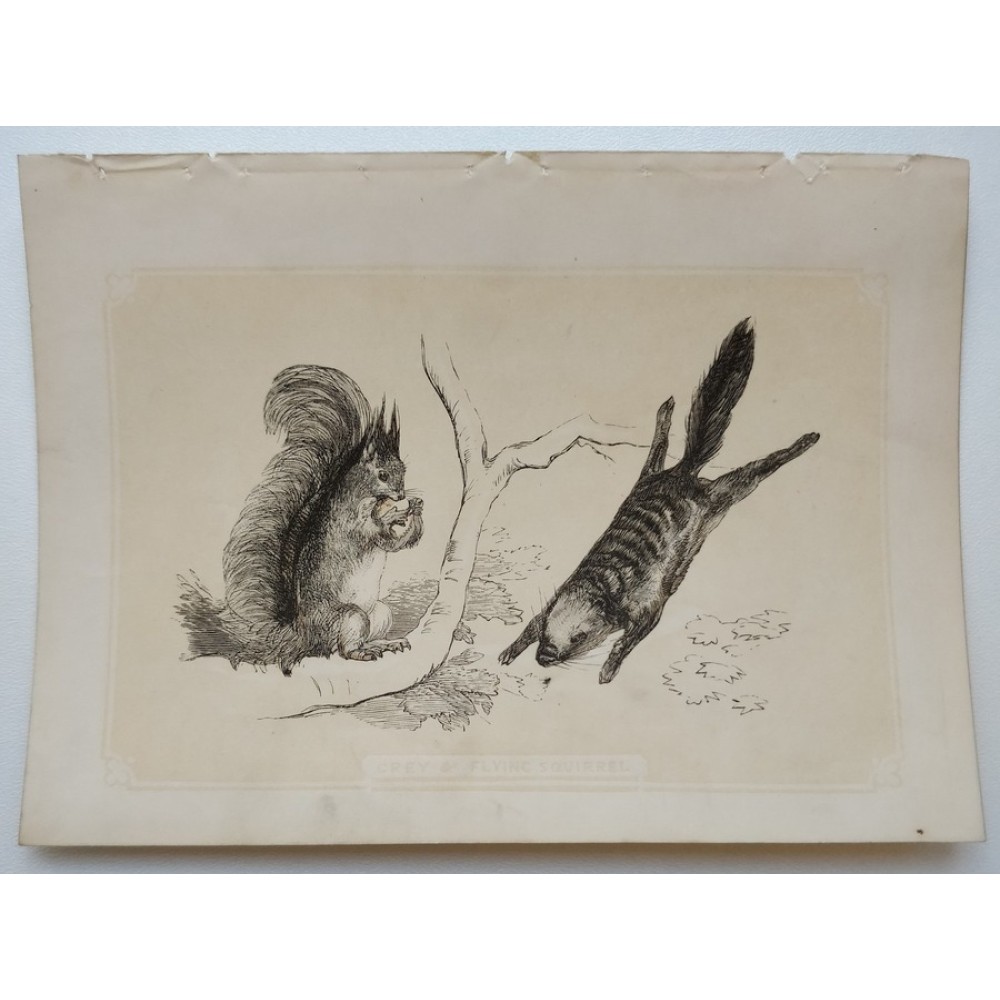
The book was published in London in 1851.
The back is clean, in excellent condition, sheet size 16.5 cm x 12 cm.
Price for the whole lot. I will ship by post.
The technique of lithography was accidentally invented by the German amateur actor Alois Senefelder in Bohemia in 1796. This was a fundamentally new printing technique following the invention of wood engraving in the 15th century.
According to one account, through absentmindedness, Senefelder recorded a laundry bill on limestone and it inadvertently transferred onto damp cloth. Senefelder realized that the inscription could be reproduced. Even if this story is fictional, there's a grain of truth within it.
Years later, the inventor published his treatise "A Complete Textbook of Lithography" (Vollständiges Lehrbuch der Steindruckerey, 1818), partially translated into Russian in 1819.
Lithography quickly gained popularity. Its only competitor was woodcut. Followers of Senefelder included: in Germany - N. Strixner, and in France - G. Engelmann. Senefelder’s student, J.-R. Lemercier (1803-1887), later became the foremost Parisian lithographer. The technique of printing on stone was known before Senefelder, but he perfected it and made it suitable for reproductive purposes (until the beginning of the 20th century, engraving and lithography were mainly used to reproduce painted pictures).
The lithographic technique, besides the advantage of mass production, has distinctive features that have always attracted artists. Lithography gained relevance in connection with romantic trends in art and the tasks of enlightenment activities in the first third of the 19th century. "Glimmering shadows, flashes of light, dynamism of the stroke, depth of a velvety matte tone resonated with romantic notions of beauty of form."[12] Lithography became indispensable in the field of journal graphics, caricature, and posters. Artists such as Eugène Delacroix, Honoré Daumier, and Paul Gavarni worked in lithography. From 1886, the possibilities of chromolithography for street posters were opened up by the French artist Jules Chéret. Bright and eye-catching theater, cabaret, and dance hall posters literally brightened the gray streets of Paris. The outstanding draftsman Henri de Toulouse-Lautrec saw new opportunities in lithography to create original posters.
Hand-colored engravings from "The Natural History of The Sacred Scriptures."
- Product Code: 11223
- Availability: In Stock
-
$0.00